Shipping container dimensions — the full Australian reference
External and internal dimensions, door openings, cubic capacity and tare weights for 10ft, 20ft, 40ft and high cube containers, plus clearances to leave.
Guide · 8 min read
The most common container complaint we hear is that the doors have stopped closing. Almost every time, the container is fine and the ground is not. An hour of preparation before the truck arrives decides whether the unit still works properly in ten years. Here is exactly what to do.
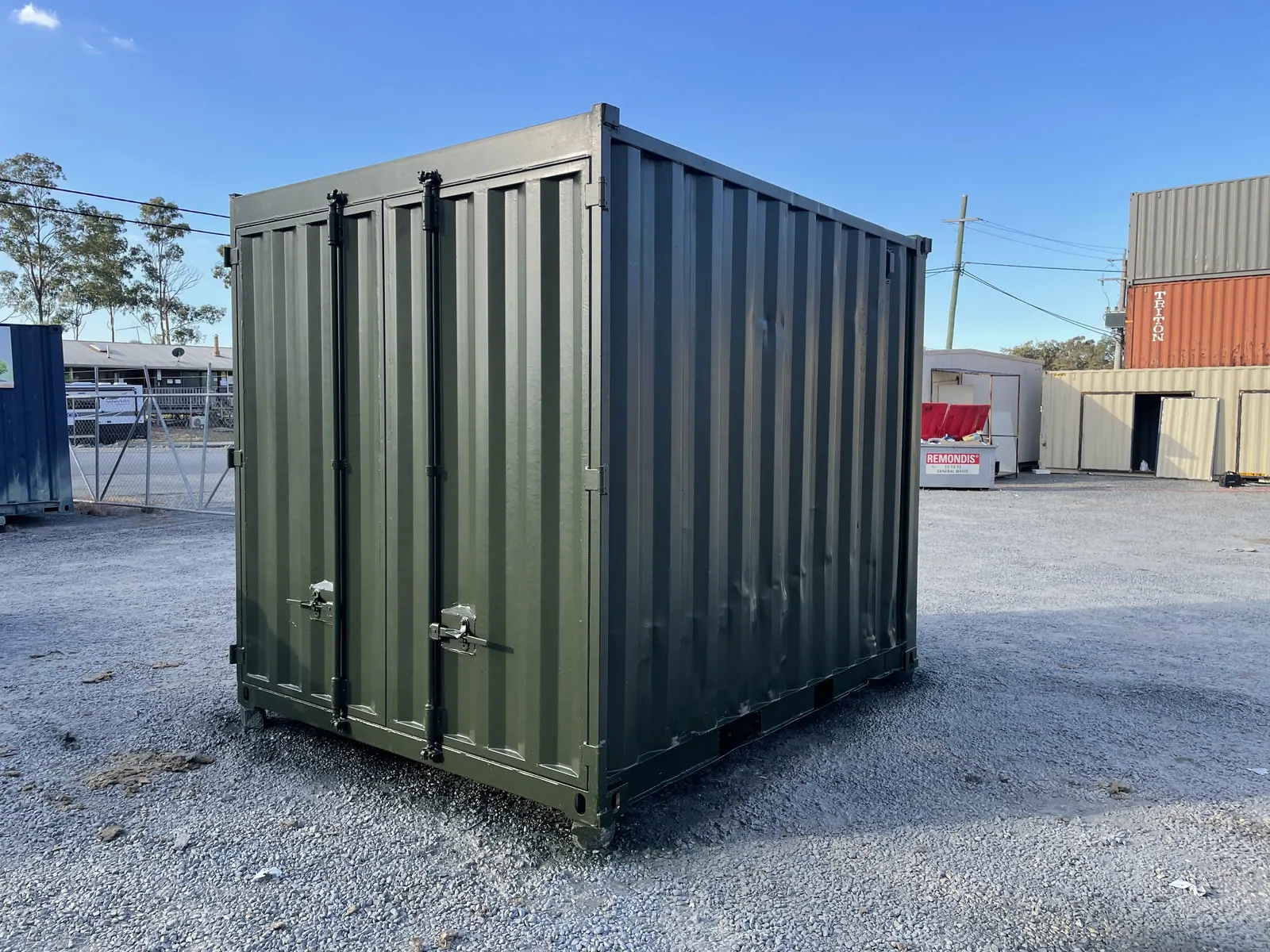
A shipping container is a rectangular steel frame. Its strength comes from four corner posts, the top and bottom rails and eight corner castings. The wall and roof panels are thin and carry almost nothing. That frame is rigid in the way a bicycle wheel is rigid — very strong in the plane it was designed for, and easy to distort if you load it wrong.
All of the weight comes down through the four bottom castings. An empty 20ft is a bit over two tonne, so each casting is putting more than half a tonne through a pad about the size of a house brick. Load it up and that multiplies. Soil does not care that the box is strong; it cares about pressure over area, and the pressure at a corner casting is very high.
If one corner settles and the other three do not, the frame twists. That twist goes straight into the door frame, because the door end is the open end and the least rigid part of the box. The result is doors that will not seat, locking bars that need a length of pipe, and a container that no longer keeps weather out along the bottom of the doors.
Do not sit a container directly on soil, grass, sand, gravel or fresh fill. Put something firm and load-spreading under each corner casting. Any of these work.
Position the pads under the corner castings themselves, not somewhere along the rails. The castings are the designed load points and the rails are not meant to carry the container mid-span. For a 40ft, some people add a set in the middle. That is optional and if you do it, make sure the middle pads sit slightly low rather than slightly high — a proud middle pad will lift the container off its corners and bow the floor.
You are aiming for all four corners within about 10 mm of each other. Get inside 25 mm and the doors will still be workable. Beyond that and you will start to feel it in the locking bars.
The important thing is not that the container is dead level in the absolute sense — it is that the four corners are in the same plane. A container sitting with a consistent, gentle fall along its length is perfectly happy. A container with three corners planted and one hanging is not.
Use a string line and a line level, a laser level, or a straight length of timber with a spirit level on it. Set the pads before the truck arrives and check them. Adjusting a pad with the container standing on it is a much bigger job than adjusting it the day before.
A deliberate slight fall towards the door end — a few millimetres over the length — is worth having, because it means any water that gets in near the doors runs back out rather than sitting at the far end of the floor. Do not overdo it. A noticeable slope makes trolleys and anything on castors a nuisance.
The space under a container is dark, sheltered and rarely looked at, which makes it exactly the place water likes to sit. Standing water under the unit rots the bottom rails and cross members from below, and that is the corrosion that ends a container's life.
Three things prevent it:
If your block floods, height above the flood line is what protects what is inside. A container is not a barrier against floodwater — water reaches the door seals and gets in, and an empty container will float. Site accordingly and store accordingly.
| Ground | What to expect | What to do |
|---|---|---|
| Existing concrete hardstand | Ideal. Nothing settles. | Thin pads or nothing. Check for falls. |
| Compacted road base | Very good if properly compacted. | Pavers or sleepers at the corners. |
| Reactive clay | Swells wet, shrinks dry. Moves seasonally. | Larger pads, and recheck level after the first wet season. |
| Sand | Drains well but spreads under point load. | Big footprint pads. Compact and bed them. |
| Black soil | Bearing collapses when wet. Very high movement. | Concrete pads on a compacted base, and generous size. |
| Fresh fill | Will settle, sometimes for years. | Wait if you can, or over-engineer the footings. |
| Lawn or topsoil | Castings punch straight through. | Strip the topsoil under each pad and bed onto firm ground. |
Steel has a memory. A container that sits racked for a few weeks will usually come good if you re-level it. A container that sits racked for a few years often will not — the frame takes a permanent set and the door end stays out of square even after the ground is fixed.
The early signs are worth knowing, because catching it early is cheap and catching it late is not.
If you see the first one, go and check the pads before you see the fourth. Nine times out of ten a corner has dropped, a jack and a packer fixes it in an afternoon, and the doors come good immediately.
Re-levelling a standing container is a job for someone with the right gear. A loaded container is very heavy and jacking it under a corner casting is not a place to improvise. If you are unsure, ring us on 0477 410 500 and we will talk you through what is involved.
The delivery page covers what each truck needs from the site, and how it works sets out the steps from quote to placement. If you tell us what the ground is and send a photograph of the spot, we will tell you honestly whether the pads you are planning are enough. Anything you are buying from our container sales range can be placed on prepared pads on the day, provided they are ready before the truck rolls in.
More guides
External and internal dimensions, door openings, cubic capacity and tare weights for 10ft, 20ft, 40ft and high cube containers, plus clearances to leave.
An honest comparison of 20ft and 40ft shipping containers: cost per cubic metre, access, resale, and when two 20fts beat one 40ft and when they do not.
How to inspect a used shipping container properly: floor first, then doors, then roof, then castings and rails. What is cosmetic, what is not, what plates mean.

Get a price
Ring us — 0477 410 500 — or send it through. Every enquiry answered within one business day.
Or skip the form and ring us — 0477 410 500, Mon–Fri 7:30am–5pm, Sat 8am–12pm